Jul 30, 2026
The Influencer Outreach Workflow: A Repeatable System for DTC Teams
A 6-stage influencer outreach workflow for DTC teams: find, contact, and track creators at scale without the spreadsheet chaos. Copy-ready template inside.
 Melissa Tan 陈慧敏2,644 words11 min read
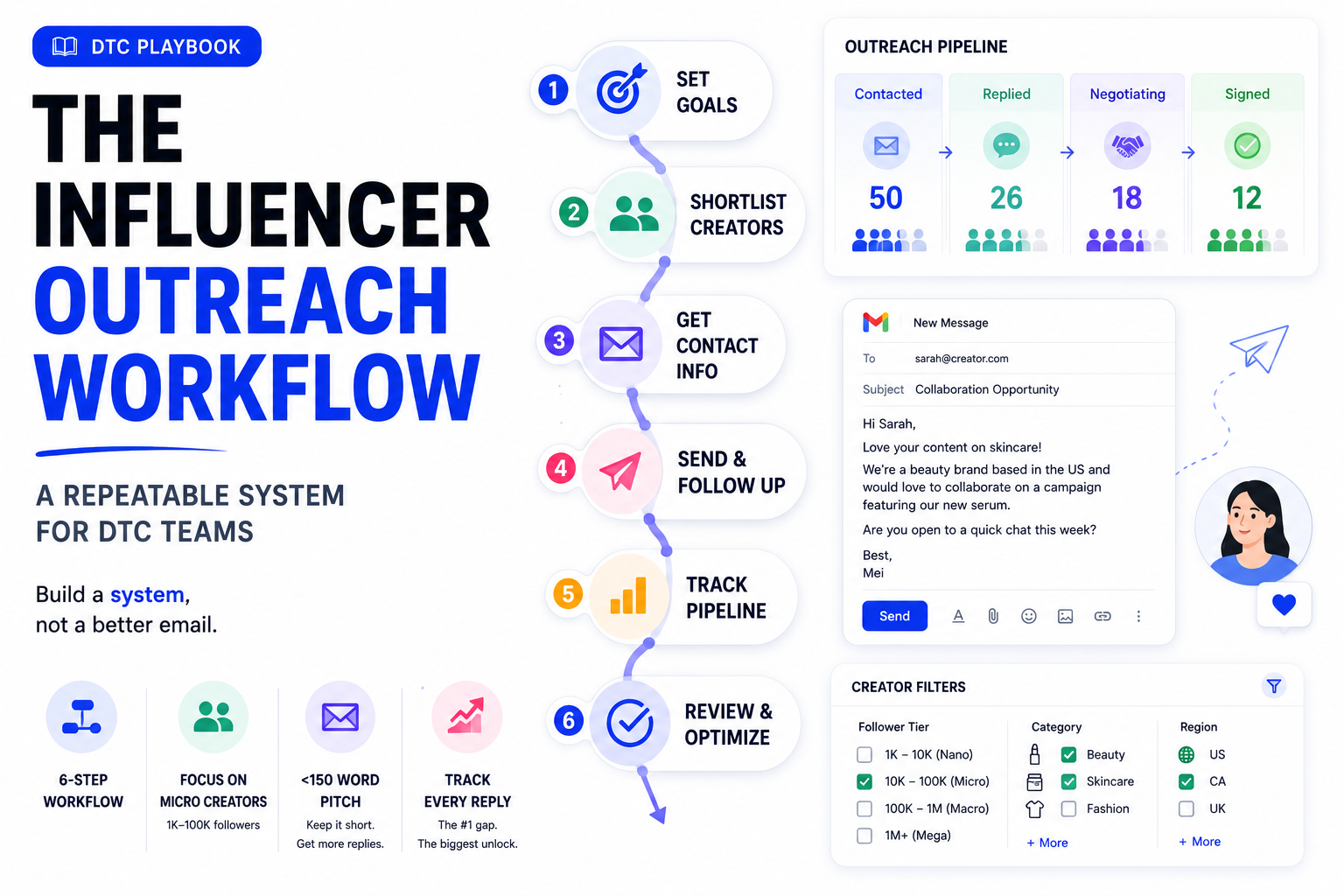
An influencer outreach workflow is a repeatable, six-stage system for finding, contacting, and tracking creators: set the goal, shortlist the right creators, get contact info, send and follow up, track the pipeline, then review. Run the same system every campaign and outreach stops being a scramble.
Here's the thing most guides get wrong. They obsess over the pitch email. But the pitch is rarely where outreach breaks. It breaks at the two steps around it: who you contact, and whether you can track what happened after you hit send.
Consider Mei, who runs influencer marketing for a beauty brand out of Shenzhen. Her team was landing maybe five creator deals a month with US micro-influencers. Not because their pitch was bad, but because they were hunting emails one by one, pasting them into a spreadsheet, and losing track of who replied. Once they ran a real workflow, they contacted 50 creators in three days and closed 18 deals that month. Same team, same pitch. The difference was the system.
This guide walks through that system: a repeatable, six-stage influencer outreach workflow built for teams doing this at scale and across borders. You'll get the concrete filtering steps competitors hand-wave, a copy-ready pitch template, and a way to track your pipeline so no reply falls through the cracks. Let's get into it.
Key Takeaways
• An influencer outreach workflow is a repeatable six-stage system: set goals, shortlist creators, get contact info, send and follow up, track the pipeline, and review, not a one-off batch of DMs.
• Response rates run higher for nano and micro creators (roughly 1K–100K followers) than for macro and mega accounts, so tier selection shapes your reply rate before you write a word.
• Keep pitch emails under 150 words. Longer messages get skimmed and skipped.
• Pipeline tracking (contacted → replied → negotiating → signed) is the single biggest gap in most teams' process, and the difference between closing 5 deals and 50.
• For cross-border DTC teams, filtering creators by follower tier, category, and region up front is what makes outreach efficient instead of a spreadsheet nightmare.
What an Influencer Outreach Workflow Actually Is (and Why "Sending DMs" Isn't One)
An influencer outreach workflow is the end-to-end process a team follows to turn "we should work with creators" into signed deals, run the same way every time. Sending a batch of DMs isn't a workflow. It's an event. And events don't scale.
Here's the difference. A one-off outreach push relies on someone's memory and a messy spreadsheet. Who did we contact? Did she reply? What did we offer the last guy? Nobody's sure. A workflow answers those questions by design, because every creator moves through the same defined stages.
Why the system beats improvisation, especially at scale:
- It's repeatable. New campaign, same process. You're not reinventing your outreach from scratch every quarter.
- It's trackable. Everyone on the team sees where each creator sits in the pipeline.
- It survives handoffs. When someone's out or a new hire joins, the process doesn't live only in one person's head.
This matters double for cross-border DTC teams. If you're an Asia-based brand contacting US or EU creators, you're juggling time zones, regional norms, and volume. Improvisation falls apart fast. A system holds.
Want to run the whole pipeline in one place instead of ten browser tabs? CreatiVault's Influencer Scout is built for exactly this. But first, the workflow itself, tool or no tool.
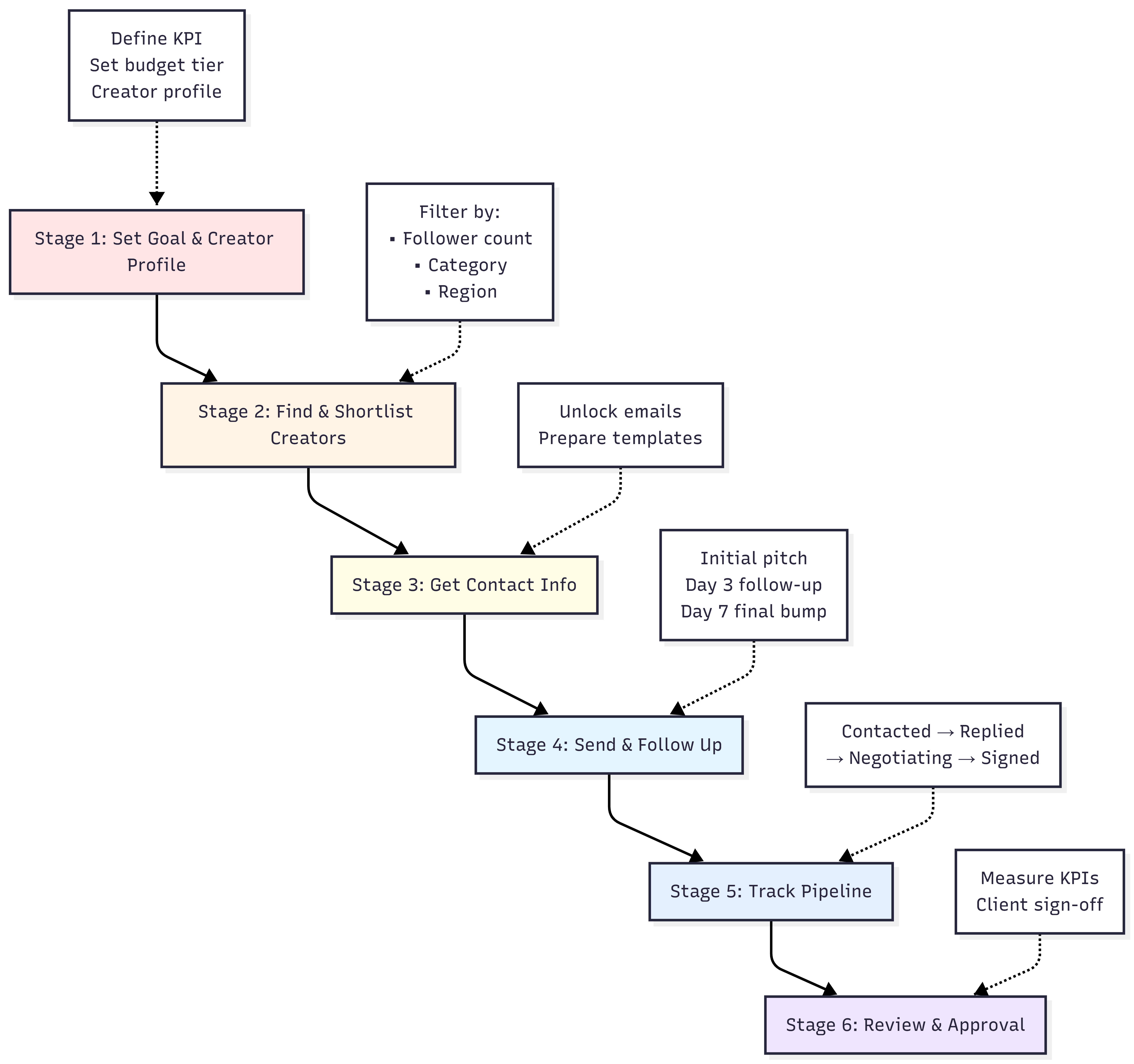
Stage 1: Set the Goal and the Creator Profile
Every good influencer outreach process starts before you contact anyone. You define what a win looks like and who you're actually trying to reach.
Skip this and you'll waste the next five stages contacting the wrong people. Lock these three things first:
- The KPI. Are you after reach, content you can repurpose as ads, affiliate sales, or a long-term ambassador? "More awareness" is not a KPI. "500K in-market impressions and 20 pieces of usage-rights content" is.
- The budget tier. Know your per-creator ceiling before you talk numbers. It shapes which follower tier you can even afford.
- The creator profile. Follower range, category, and region. This is the filter you'll shortlist against in Stage 2.
Nano vs. Micro vs. Mid vs. Macro: Which Tier Fits Your Goal
Follower count isn't vanity here. It changes your response rate, your cost, and your engagement. Pick the tier that matches your KPI, not the biggest number you can afford.
Table 1: Creator tier response rate and usage benchmarks.
According to outreach benchmarks compiled by mysocial.io, reply rates trend higher as you move down the tiers, nano and micro creators answer more of their own messages and say yes more often. For most DTC brands, the 10K–100K micro band is the value zone: engaged audiences, real reply rates, and prices that let you run 50 partnerships instead of one.
Do this now: write your creator profile as one line. Example: "US-based beauty micro-influencers, 50K–200K followers, skincare focus." That single line drives your entire shortlist.
Stage 2: Find and Shortlist the Right Creators
This is the step every competitor guide hand-waves. "Use a tool to find creators," they say, then move on. But finding and shortlisting is exactly where most teams get stuck, so let's be concrete.
You're filtering a large creator pool down to a list you can actually act on. Three filters do most of the work:
- Follower count. Match the tier you picked in Stage 1. Set a floor and a ceiling (say, 50K to 200K) so you don't waste time on accounts too small or too gated.
- Category. Beauty, fashion, fitness, home. You want creators whose existing content already fits your product, not a generalist you have to educate.
- Region. This is the cross-border make-or-break. An Asia-based team selling into the US needs to filter for US-based creators specifically, or you'll pitch people whose audience can't buy your product.
Manually? This means scrolling hashtags, checking bios, guessing at audience location, and copying handles into a spreadsheet for hours. That's the spreadsheet nightmare Mei's team lived in.
Building a Shortlist You Can Actually Act On
A shortlist isn't a dump of 300 handles. It's a curated set of 40–60 creators who genuinely fit, ranked so you know who to contact first.
Good shortlist hygiene:
- Vet for fit, not just size. Skim recent posts. Does the content match your brand's vibe? Are comments real or bot-driven?
- Cap it at a workable number. 50 is enough to run a campaign and small enough to personalize.
- Keep it in one place. Not three spreadsheets and a Slack thread.
This is where CreatiVault's Influencer Scout does the heavy lifting. You filter the creator database by follower count, category, and region, then build a shortlist right there, no manual handle-hunting. What took Mei's team a full day of scrolling now takes a few filter clicks.
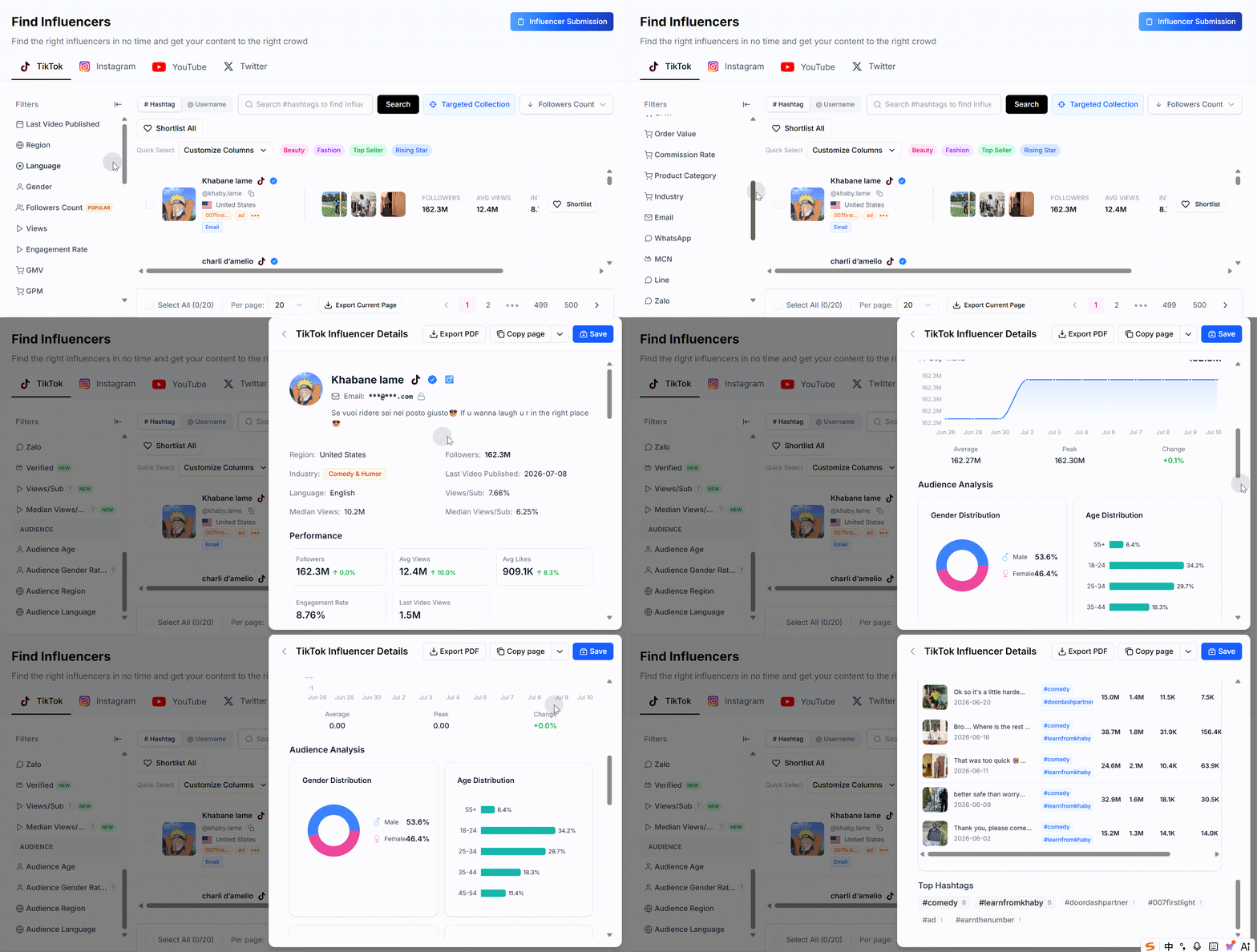
Ready to skip the hashtag scroll? Filter creators by tier, category, and region and build your first shortlist in minutes.
Stage 3: Get Contact Info and Prep Outreach
You've got your shortlist. Now you need to reach these people, and that means finding real contact info and choosing the right channel.
Here's a truth most beginner guides dodge: DMs don't scale. A DM to a 100K-follower creator lands in a request folder they check once a week, if ever. Most influencer outreach tools stop at finding creators; you also need contact info and a way to track replies. For volume outreach, email wins.
Why email (EDM) beats DMs at scale:
- It reaches a real inbox creators actually monitor for business.
- It's professional. A proper email signals you're a real brand, not a bot.
- It's trackable and templatable, so you can send 50 personalized pitches without writing 50 from scratch.
The catch is that finding creator business emails manually is brutal. You dig through bios, link-in-bio pages, and "for business inquiries" notes, one creator at a time.
Templated but Personalized: The Balance That Gets Replies
The teams that win send templates that don't feel like templates. The frame is reusable; the top is personal.
Your template handles the structure (who you are, the offer, the ask). You personalize two or three fields per creator: their name, a specific piece of their content you liked, and why they specifically fit. That's the balance, 80% reusable frame, 20% genuine personalization.
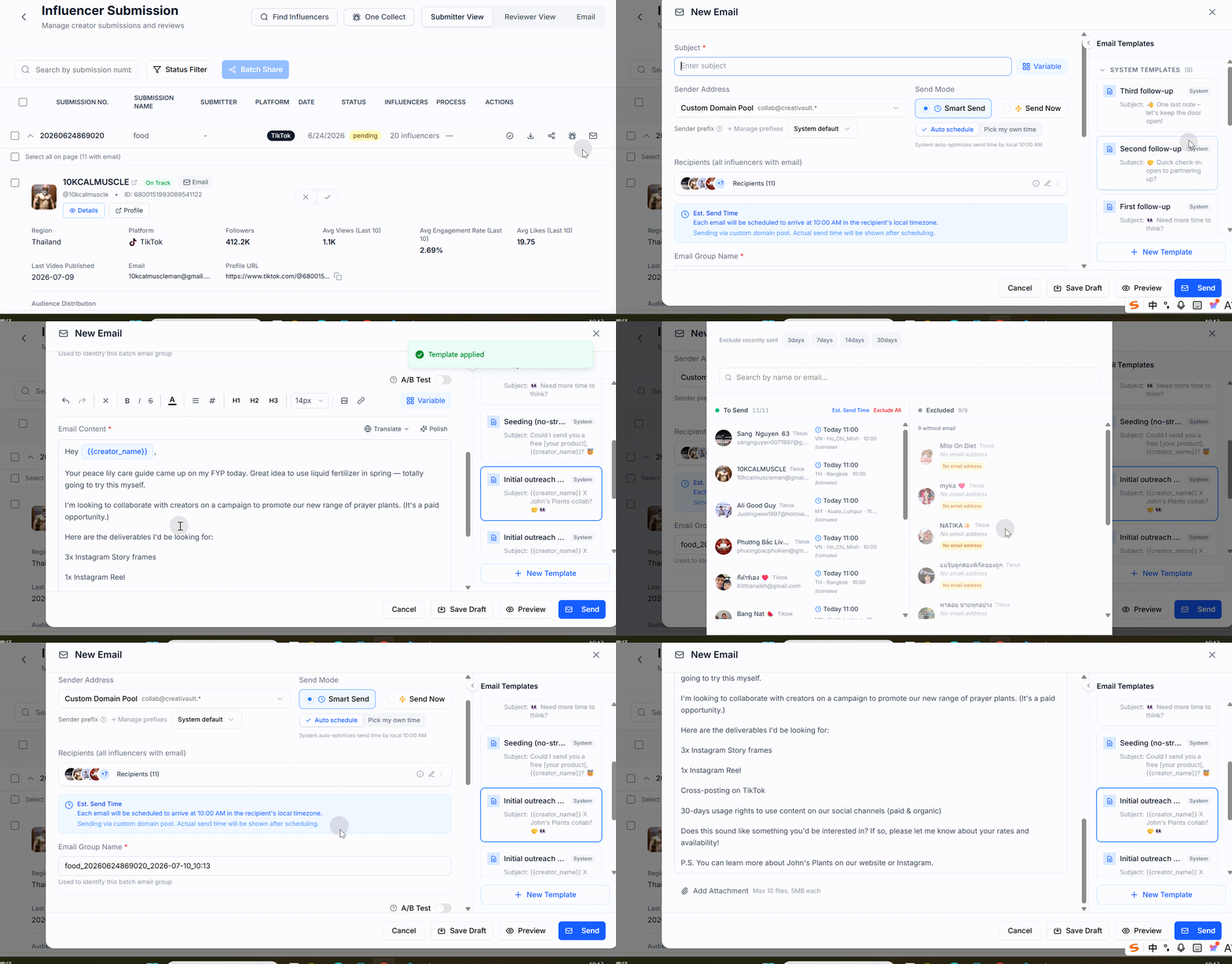
With Influencer Scout, you unlock creator emails and send templated EDM campaigns in bulk. You write the template once, drop in the personalization fields, and send to your whole shortlist, no email hunting, no copy-paste marathon.
Stage 4: Send, Follow Up, and Don't Get Ignored
Now you send. Two rules decide whether you get replies: keep it short, and follow up.
On length, the benchmark is clear across outreach sources: keep your pitch under 150 words. Creators get dozens of these a week. A wall of text gets skimmed and archived. A tight, specific pitch gets read.
On follow-up, most deals live or die here. A single email gets lost. A polite follow-up two to four days later often outperforms the original. Cap it at two follow-ups, then move on, chasing a third time reads as desperate.
Follow-up cadence that works:
- Day 0: Initial pitch.
- Day 3: Short, friendly bump. "Just floating this back to the top of your inbox."
- Day 7: Final follow-up with a soft deadline or a sweetener (bonus product, flexible timeline).

Influencer Outreach Email Template (Copy-Ready)
Here's a template that hits the under-150-word mark and leaves room for personalization. Swap the bracketed fields per creator.
That's 110 words with the frame filled in. Personal at the top, clear on the offer, easy to say yes to.
Stage 5: Track the Pipeline
This is the stage that separates 5 deals from 50. And it's the one almost every guide skips.
Once you've sent 50 emails, replies start trickling in over days and weeks. Without a system, chaos: you re-email people who already said no, forget to follow up with someone mid-negotiation, and lose the creator who was ready to sign because her reply got buried.
A pipeline fixes this by giving every creator a status:
- Contacted, pitch sent, no reply yet.
- Replied, they answered; your move.
- Negotiating, working out terms, deliverables, rate.
- Signed, deal locked, moving to content.
Pipeline visibility is the whole game. When your team can see that 12 creators are in "negotiating" and 8 are stalled in "replied," you know exactly where to spend today. Nobody falls through the cracks because there are no cracks, just stages.
Back to Mei's team. The reason they jumped from 5 deals to 18 wasn't a better pitch. It was that they could finally see their pipeline. Eight creators who'd replied and gone cold got one more nudge, and half of them signed. Those deals existed the whole time. They just needed a system to surface them.
In Influencer Scout, you categorize and track creators through the pipeline with these exact statuses, so your whole team works from the same view instead of five conflicting spreadsheets.
Stage 6: Review, and Share for Approval
The campaign's live. Two things close out the workflow: measure it, and (if you're an agency) get client sign-off.
On measurement, go back to the KPI you set in Stage 1. Did you hit the impressions, the content volume, the affiliate sales? Log what worked so next campaign's shortlist starts smarter. The creators who delivered this time are your ambassador shortlist for next time.
Sharing Shortlists With Clients for Sign-Off
Agencies have an extra loop the top-ranking guides completely ignore: the client has to approve who you reach out to before you spend their budget.
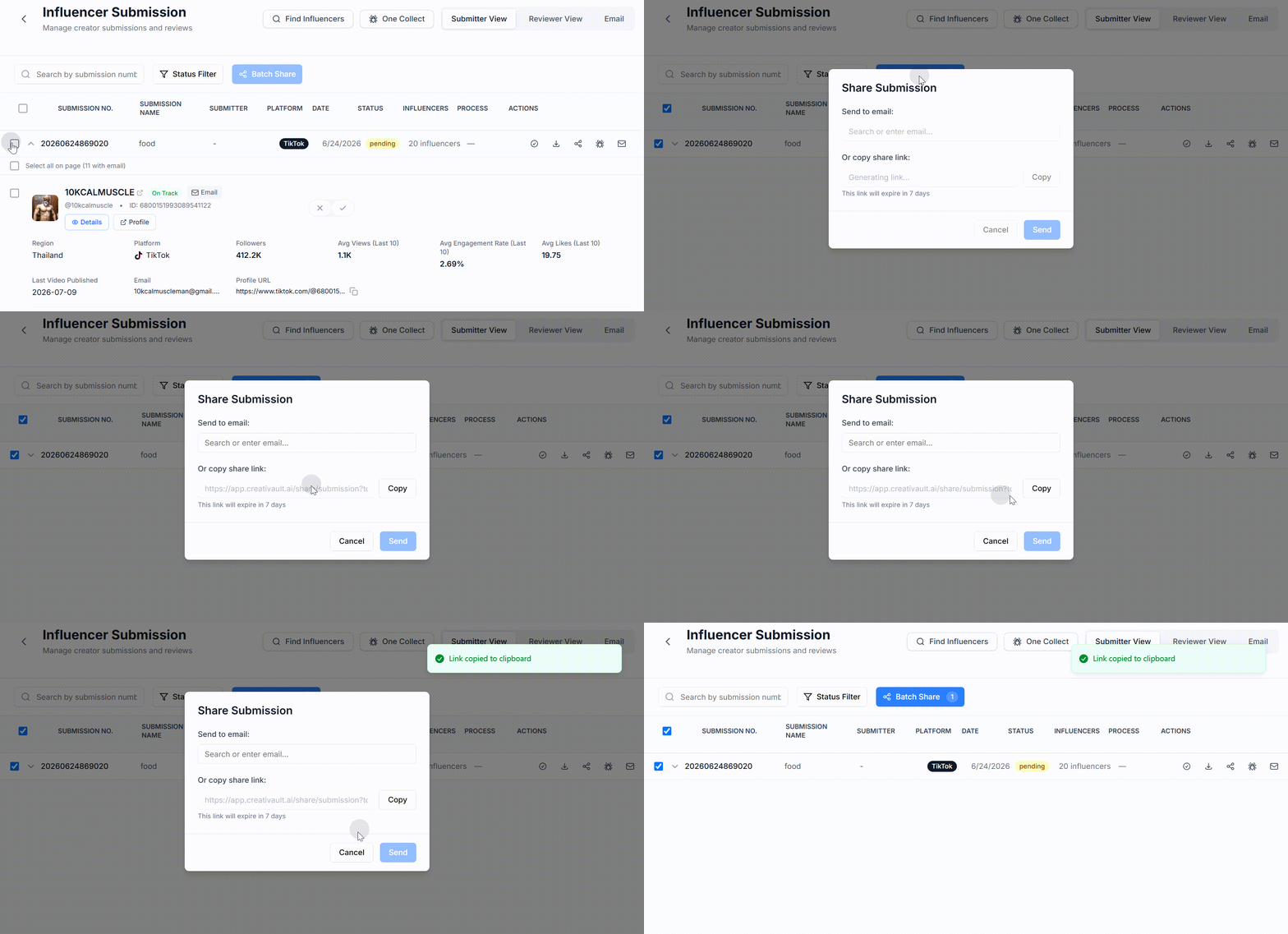
Done manually, that's a screenshot-and-email mess, or worse, a spreadsheet the client edits and breaks. The clean version is a shareable shortlist the client can review and confirm.
CreatiVault lets you share a shortlist with your client for confirmation directly. They see the curated creators, sign off, and you move to outreach, no version-control nightmare, no "wait, which list is final?"
Common Mistakes That Kill Outreach
Even with the workflow, a few habits sink reply rates. Avoid these.
Do:
- Personalize the first two lines. Name plus a specific piece of their content. It's the single biggest reply-rate lever.
- Lead with what's in it for them. Product, pay, exposure, be clear early.
- Follow up twice, then stop. Persistence works; pestering doesn't.
- Track every creator's status. If it's not in the pipeline, it doesn't exist.
Don't:
- Send a generic blast. "Hi dear creator" gets deleted instantly.
- Bury the ask. If a creator can't tell what you want in 10 seconds, you've lost them.
- Over-write the pitch. Past 150 words, replies drop.
- Ghost your own pipeline. The deal you forgot to follow up on is the deal your competitor closes.
Frequently Asked Questions
What is an influencer outreach workflow?
An influencer outreach workflow is a repeatable, staged process for finding, contacting, and tracking creators: set goals and a creator profile, shortlist the right creators, get contact info, send and follow up, track the pipeline by status, then review results. It replaces one-off DMs with a system you run the same way every campaign.
How to do influencer outreach at scale
Outreach scales through three moves: filter a creator database down to a targeted shortlist (by follower tier, category, and region), send personalized templated emails in bulk instead of manual DMs, and track every creator through a pipeline (contacted → replied → negotiating → signed) so nothing gets lost. Doing this in one tool beats juggling spreadsheets and browser tabs.
How long should an influencer outreach email be?
Keep it under 150 words. Creators receive dozens of pitches weekly, and long emails get skimmed and skipped. Lead with one personalized line about their content, state your offer clearly, and make the ask easy to say yes to.
What's the best way to find influencers for a DTC brand?
Filter by follower tier, category, and region rather than scrolling hashtags. For most DTC brands, micro-influencers (10K–100K followers) hit the sweet spot of engagement, reply rate, and affordability. Cross-border teams should filter for creators in their target selling market specifically, so the audience can actually buy the product.
How do you track influencer outreach?
Give every creator a pipeline status: contacted, replied, negotiating, or signed. This visibility tells your team where each conversation stands and where to focus, so no reply goes cold and no deal slips through. A shared pipeline view beats individual spreadsheets that fall out of sync.
The Takeaway: The Workflow Is the Edge
Most teams think better outreach means a better pitch. It doesn't. The pitch matters, but the edge lives in the system around it: knowing exactly who to contact, reaching them at scale, and tracking every conversation so no deal slips away.
That's what the six stages give you, a repeatable influencer outreach workflow you run the same way every campaign:
- Set the goal and creator profile
- Find and shortlist the right creators
- Get contact info and prep outreach
- Send, follow up, and don't get ignored
- Track the pipeline by status
- Review results and share for approval
This is your influencer outreach strategy in one repeatable system, not a pile of one-off tactics. Run it once and you'll never go back to the spreadsheet scramble. Mei's team didn't. They went from 5 deals a month to 18, same people, same product, just a system.
Ready to run the whole pipeline in one place? Explore CreatiVault's Influencer Scout, find creators, unlock emails, send at scale, and track every deal from first contact to signed. Stop improvising. Start running the workflow.
 Sophie Klein