Jul 29, 2026
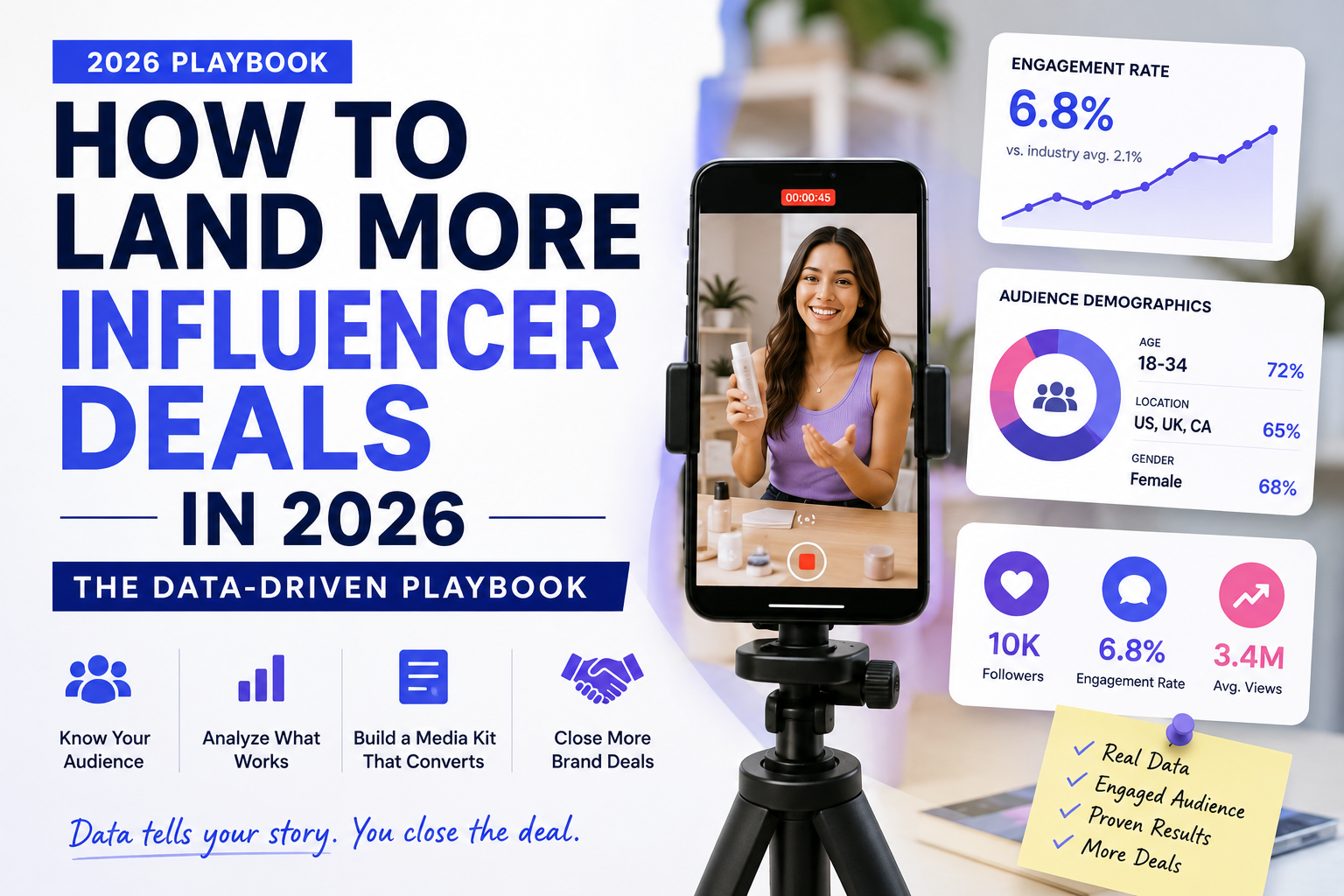
How to Land More Influencer Deals With Better Data
Stop pitching with follower count alone. Land more influencer deals using audience data, creator research, and media kits brands approve.
 Sophie Klein3,398 words14 min read
The fastest way to land more influencer deals is to pitch brands with proof: who your audience is, how they engage, what content you can create, and why that audience matches the brand's customer. Follower count still matters, but it is no longer enough to close serious creator partnerships.
Most creators pitch like this: "I love your brand, I have 38K followers, let's collaborate." Brands hear that dozens of times a week. What they rarely hear is: "My audience is mostly US-based women aged 25 to 34, my product-review videos outperform my account average, and I found three similar creators you've already sponsored. Here's a concept that fits your current campaign."
That second pitch feels different. It gives the brand something to evaluate.
This guide shows you how to turn your creator profile into a deal-ready business asset. We'll cover audience analytics, media kits, competitor research, pitch structure, rate positioning, and how a browser tool like CreatiVault can help you gather the data brands expect.
Key Takeaways
• Brands evaluate influencer deals on audience fit, engagement quality, content format, and proof of past performance, not follower count alone.
• A strong media kit should include your bio, social stats, engagement rate, audience demographics, best content, past partnerships, and contact details.
• The best pitch targets brands that already work with creators in your niche, then explains why your audience is a better or complementary fit.
• Creator research tools help you analyze your audience, find similar creators, study sponsored posts, and export data for pitches.
• CreatiVault's browser extension is built for creators who want to analyze accounts, study winning content, collect references, and turn data into better brand-deal pitches.
What Are Influencer Deals?
Influencer deals are paid or product-based partnerships between a creator and a brand. The creator makes content, the brand gets access to that creator's audience, and both sides agree on deliverables, usage rights, timeline, compensation, and disclosure requirements.
Common influencer deals include sponsored posts, product reviews, unboxings, affiliate partnerships, whitelisted ads, UGC packages, ambassador programs, and long-term retainers. Some deals pay cash. Some start with free products. The serious ones define exactly what the creator will make, where the content will appear, how the brand can reuse it, and when payment happens.
If a brand is offering free product only, treat it as a starter collaboration, not a full commercial deal. If the brand wants usage rights, exclusivity, or paid ad permissions, that is extra value and should be priced separately.
Why Follower Count Alone No Longer Wins Influencer Deals
A big follower count gets attention. It doesn't close the deal by itself.
Brands have become more careful. They know a creator can have a large audience and still deliver weak results. Followers can be passive. Comments can be shallow. A post can look popular without moving anyone to click, save, comment, or buy.
That is why brands now ask questions that go beyond reach:
- Who follows this creator?
- Where are those followers located?
- How old are they?
- Do they match our customer profile?
- Does the creator's audience respond to product content?
- Can the creator make the format we need?
- Have previous sponsored posts performed well?
Later's guide to influencer media kits makes this point clearly: your media kit should include social stats, engagement rate, audience demographics, previous partnerships, and contact information. It also notes that engagement rate matters more than follower count and that brands can verify creator stats with tools.
So the game has changed. The creators who win influencer deals are the ones who make the brand's job easier. They do not ask the brand to guess. They show the fit.
Mini-story: the pitch that changed after one analytics export
Mina, a skincare creator with a mid-sized TikTok account, used to send the same pitch to every beauty brand. It opened with her follower count and a short line about loving the product. Most brands ignored it.
Then she pulled her audience data. She found that her strongest followers were women in their late 20s and early 30s, heavily concentrated in the US and Canada. She also saw that her routine-style videos got more saves than her trend videos. Her next pitch led with those facts and proposed a "7-day sensitive-skin routine" series.
The brand replied within two days. Not because Mina suddenly became a different creator, but because the pitch became easier to approve.
Want to see the kind of audience data brands ask for? Start with native analytics, then use the CreatiVault browser extension to analyze creator profiles and export cleaner data for your media kit.
Step 1: Know Your Audience Before You Pitch
If you want more influencer deals, start by answering the question brands care about most: "Is this creator's audience our customer?"
You need more than a follower count. You need an audience snapshot.
Pull the basic audience data first
Start with the free analytics inside each platform:
- Instagram Insights: follower age, gender, location, active times, content performance
- TikTok Analytics: follower demographics, traffic sources, video-level performance
- YouTube Studio: viewer age, geography, watch time, returning viewers, traffic sources
Put the data in one place. A simple spreadsheet is enough.
Track:
- Follower count by platform
- Engagement rate by platform
- Top countries and cities
- Age range
- Gender split
- Best-performing content type
- Average views by format
- Strongest posts from the last 90 days
This becomes the foundation of your media kit.
Add context, not just numbers
Raw numbers are useful, but context makes them persuasive.
For example, "My audience is 68% women" is a data point. "My audience is 68% women, and my highest-saving videos are morning routine and product comparison videos" is a pitch angle.
The second version tells a skincare, wellness, or home brand how to work with you.
Use profile analysis to spot your strengths
Native analytics show your account. Creator research tools help you compare your account with others.
CreatiVault's browser extension is useful here because it works while you browse TikTok, Instagram, YouTube, Facebook, and Pinterest. On creator profiles, it can surface creator information, audience analysis, engagement signals, follower geography, and content tags. You can also collect creators, export data, and build a cleaner research workflow.
That matters because your pitch should not just say "I have an audience." It should say "I understand my audience."
Step 2: Build a Media Kit Brands Can Actually Use
Your media kit is not decoration. It is a sales document.
Later describes an influencer media kit as a business card, CV, and portfolio in one. That is the right way to think about it. A good media kit lets a brand decide whether to continue the conversation without asking you for five extra screenshots.
What to include in your media kit
Keep it short, clean, and specific. Four to five pages are enough for most creators.
1. Bio and positioning
Open with who you are, what you create, and who you serve. Avoid generic lines like "I create lifestyle content." Say what kind of lifestyle content and for whom.
Example:
"I create practical skincare and simple-routine content for women building low-maintenance beauty habits."
2. Platform stats
List each platform separately:
- TikTok followers
- Instagram followers
- YouTube subscribers
- Average views
- Engagement rate
- Posting frequency
Do not bury engagement rate. Brands care about it.
3. Audience demographics
This section often does the selling. Include:
- Age range
- Gender split
- Top countries or cities
- Language
- Core interests
If your audience matches the brand's customer, make that obvious.
4. Best-performing content
Show three to five examples. For each one, include:
- Screenshot or thumbnail
- Format: review, tutorial, unboxing, vlog, comparison
- Views
- Engagement
- Saves, comments, or shares if relevant
- Why it worked
This helps brands picture the kind of post you would create for them.
5. Past partnerships or sample concepts
If you have brand work, include it. If you do not, create sample concepts using products you already own. Brands mainly want to see that you can make commercial content without sounding stiff.
6. Contact and collaboration options
Make the next step easy. Include email, social handles, and the types of deliverables you offer.
You can list packages if you want:
- 1 TikTok video
- 1 Instagram Reel + 3 Stories
- 1 YouTube Short + usage rights
- Monthly creator package
Keep the design simple
Do not over-design it. Later recommends a clean, easy-to-read kit with strong photography and a style that matches your brand. Canva is enough. A polished Google Slides export is enough.
The mistake is trying to make the media kit look expensive while the data is thin. Flip that. Clear data beats fancy layout.
Step 3: Study Creators Who Already Get Influencer Deals
You do not need to guess which brands pay creators. The evidence is already public.
Look at creators in your niche who are slightly ahead of you. Not celebrities. Not accounts 50 times your size. Find people close enough that the same brands could plausibly work with you.
Then study their sponsored content.
What to look for
Open each creator profile and track:
- Which posts are sponsored or tagged as paid partnerships
- Which brands appear repeatedly
- What content format the sponsored posts use
- Whether the brand uses discount codes or affiliate links
- How the audience responds in comments
- Whether the creator posts one-off ads or repeat partnerships
Patterns appear fast.
If a supplement brand has sponsored five fitness creators in your follower tier, they are a warm lead. If a skincare brand only works with licensed dermatologists and you make casual GRWM content, they are probably not your best first target.
Use lookalike research to expand your list
Manual research works, but it is slow. CreatiVault's extension includes lookalike creator search: start with one creator, then find similar creators by platform, region, language, follower range, and other filters.
That gives you a bigger map of your niche.
You can use it to answer questions like:
- Which creators look like me?
- Which brands sponsor those creators?
- Which content formats keep showing up?
- Which creators get repeat partnerships?
- What kind of video structure performs best?
This is where influencer deals become less random. You stop pitching brands because you like them. You pitch brands because you found evidence they buy what you make.
Mini-story: the brand list hiding in plain sight
Dario made cooking videos for students and young professionals. He wanted food-brand partnerships but kept pitching big household names. No replies.
Then he researched 20 similar creators and noticed the same three meal-kit and sauce brands appearing again and again. They were not the biggest brands, but they were actively sponsoring creators in his exact format. He rebuilt his pitch list around those brands and included two sample video concepts based on their previous campaigns.
The first deal was smaller than the dream brand he wanted. But it became a case study, and that case study made the next pitch easier.
Step 4: Improve the Content Brands Will Pay For
Brands do not just buy your audience. They buy your ability to create content that feels native to your audience.
That is why your best organic posts matter. They show the brand what you can do when no one is paying you.
Know your strongest formats
Before pitching, identify your strongest content types:
- Product reviews
- Tutorials
- Routine videos
- Unboxings
- Before-and-after content
- Comparison videos
- Story-led posts
- List-style recommendations
Then match those formats to brands.
A skincare brand may prefer a routine video. A productivity app may prefer a tutorial. A fashion brand may want styling ideas. A food brand may want a recipe integration.
Do not pitch every brand the same idea.
Use video analysis to understand why content works
CreatiVault's extension includes AI video analysis. It can break down a video's storyboard, viral factors, content quality, benchmark comparison, suggestions, creator playbook, hashtags, and score.
That sounds technical, but the creator use case is simple: stop guessing why a video worked.
If your best product video worked because the first three seconds showed the result, keep that structure. If your weaker sponsored-style video lost people because the product appeared too late, fix it before pitching another brand.
The goal is not to copy yourself forever. The goal is to understand your own patterns well enough to sell them.
Build a proof library
Create a folder with your strongest content examples. For each post, note:
- Format
- Hook
- Product or topic
- Views
- Engagement
- Comments or saves
- Why it worked
This becomes your proof library. When a brand asks, "What would you make for us?" you can answer with examples, not theory.
Want to analyze your own videos before pitching? Use CreatiVault's AI video analysis workflow to study your best posts and turn them into repeatable brand-deal concepts.
Step 5: Pitch Brands With a Specific Deal Idea
A vague pitch makes the brand do the work. A specific pitch makes the decision easier.
Here is the basic structure:
- Personal opener: mention a real campaign, product, or creator collaboration from the brand
- Audience fit: explain why your audience matches their customer
- Content idea: propose one specific concept
- Proof: link your media kit and one or two relevant examples
- Next step: ask if they are open to discussing a collaboration
Pitch example
Hi [Name], I saw your recent campaign with [Creator] around [Product]. My audience overlaps closely with that buyer: [short audience summary]. I create [content format] around [niche], and one idea that could fit your next push is [specific concept].
I attached my media kit with audience demographics, engagement rate, and recent performance examples. If you're open to creator partnerships this month, I'd be happy to send a tighter concept and rate options.
This works because it is not begging. It is proposing.
What not to send
Avoid these:
- "I love your brand, collab?"
- "Can you send free products?"
- "I have followers and can promote you."
- Long life stories
- Rate cards with no audience data
The brand does not need your entire creator journey. They need a reason to believe this influencer deal will work.
Step 6: Price Influencer Deals Without Underselling Yourself
Pricing is hard because every deal is different. Follower count, engagement, niche, platform, deliverables, usage rights, exclusivity, production effort, and timeline all change the rate.
So instead of memorizing a universal rate, think in components.
What affects your rate
Deliverables
One TikTok video is not the same as one TikTok video, three Stories, raw footage, and a 30-day usage license.
Usage rights
If the brand wants to use your content in paid ads, that is extra value. Charge for it.
Exclusivity
If they ask you not to work with competing brands, they are limiting your future income. That should be paid.
Revision rounds
One light edit is normal. Multiple rounds of script, shot, and caption revisions become production work.
Timeline
Rush work costs more.
Create simple packages
Start with three options:
- Starter: 1 short-form video
- Standard: 1 video + 3 Stories or reposts
- Campaign: 2-3 videos + usage rights + performance report
Packages make negotiation easier. Instead of defending a single number, you can adjust deliverables.
If a brand says your rate is too high, reduce scope before reducing price. That keeps your work valued.
Mini-story: the creator who sold the report, not just the post
Leah, a travel creator, used to quote one flat rate for every Reel. Brands often pushed back. Then she split the offer into packages and added a simple post-campaign report: reach, engagement, saves, comments, link clicks if available, and audience response.
The report took 20 minutes to prepare, but it made the deal feel more professional. Brands were not just buying content. They were buying content plus learning. Her close rate improved because the package felt safer.
That is the bigger lesson. The more you reduce uncertainty for a brand, the easier the deal is to approve.
Step 7: Track Results So One Deal Becomes Three
The fastest path to more influencer deals is repeat work. Repeat work comes from making the brand feel smart for choosing you.
After the post goes live, send a simple performance summary.
Include:
- Post link
- Views or reach
- Engagement
- Saves, shares, comments if relevant
- Audience response highlights
- Screenshots from native analytics
- What you would test next time
Do this even if the brand does not ask.
Most creators disappear after posting. If you send a clean recap, you become easier to rebook. You also create proof for future pitches.
CreatiVault helps here because you can collect creator data, export reports and keep your collaboration evidence organized instead of digging through screenshots every time a brand asks.
FAQ: Influencer Deals
How many followers do I need to get influencer deals?
You can start pitching before you have a large audience if your niche is clear and your engagement is strong. Brands increasingly value micro and nano creators when their audience is specific and trusted.
What should I include in a media kit for brand deals?
Include a short bio, social stats, engagement rate, audience demographics, best-performing content, previous partnerships or samples, collaboration options, and contact details.
How do I find brands that pay influencers?
Study creators in your niche and track their sponsored posts. Brands that repeatedly sponsor similar creators are better targets than random brands you personally like.
Should I list rates in my media kit?
You can, but it depends on your strategy. Some creators list starting packages to filter low-budget inquiries. Others say "custom rates based on deliverables" and discuss pricing after learning the scope.
Can tools help me land more influencer deals?
Yes. Tools cannot replace good content, but they help you analyze your audience, study competitors, build better media kits, and pitch brands with proof. That makes your deal process more professional.
How much do influencer deals pay?
Influencer deals pay based on platform, audience fit, engagement, niche, deliverables, usage rights, exclusivity, and turnaround time. A short sponsored post, a full tutorial, and a paid-ad usage package should not be priced the same.
What should be included in an influencer deal contract?
An influencer deal contract should cover deliverables, timeline, approval process, payment terms, disclosure language, usage rights, exclusivity, cancellation rules, and reporting expectations. If a brand wants to reuse your content in ads, make sure the contract says how long and where.
Are free product deals worth it?
Free product deals can be worth it when you're building your first portfolio, testing a niche, or working with a brand that could become a paid partner. They are usually not worth it if the brand demands multiple deliverables, usage rights, or exclusivity without payment.
How do I ask a brand for a paid deal?
Ask with a specific proposal, not a generic collaboration request. Explain why your audience fits, what content you would make, what deliverables are included, and where the brand can review your media kit.
What is the difference between influencer deals and affiliate deals?
Influencer deals usually pay for content creation and audience access. Affiliate deals pay based on tracked sales or referrals. Many partnerships combine both: a flat content fee plus affiliate commission.
Do I need to disclose paid influencer deals?
Yes. Sponsored content should be clearly disclosed. The FTC's disclosure guidance for social media influencers explains that disclosures should be hard to miss and easy to understand.
The Takeaway: Treat Your Creator Profile Like a Business
Influencer deals do not come from waiting to be noticed. They come from proving that your audience, content, and idea match what a brand is trying to sell.
Start with your data. Pull your audience demographics. Find your best content formats. Study creators who already get sponsored in your niche. Build a media kit that is clear, honest, and useful. Then pitch brands with a specific deal idea, not a vague collaboration request.
If you do that, you stop sounding like a creator asking for free products. You start sounding like a partner who understands the business side of content.
Ready to build that proof? Try the CreatiVault browser extension. It is free to start, then $9.99/month, and helps creators analyze profiles, study similar accounts, download reference content, run AI video analysis, and export data for better brand-deal pitches.
---