Jul 30, 2026
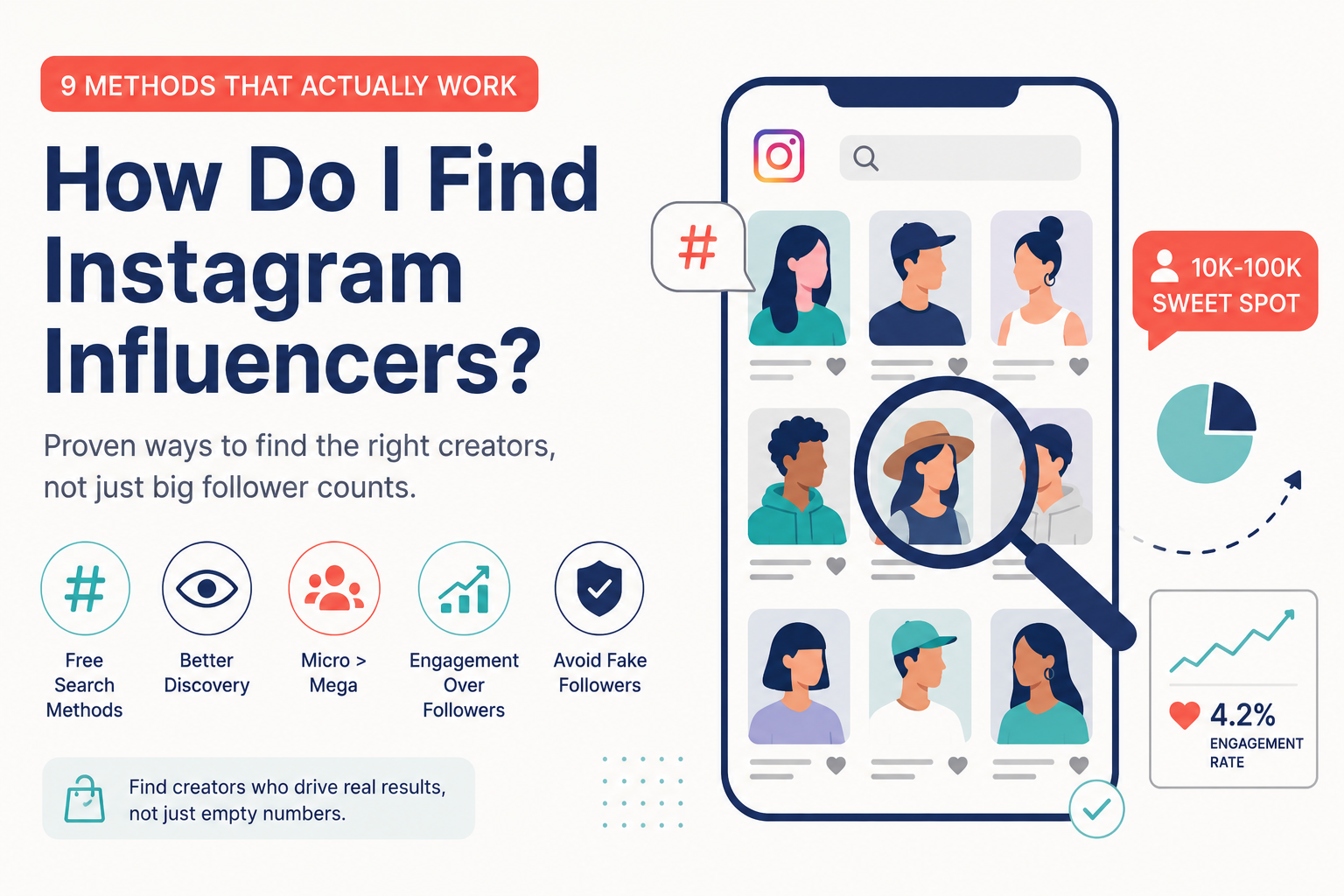
How Do I Find Instagram Influencers? 9 Methods (2026)
Learn how to find Instagram influencers with 5 free methods, discovery tools, and a vetting checklist. Spot fake followers before you pay. Start today.
 Daniel Brennan2,134 words9 min read
To find Instagram influencers, start free: search niche hashtags, mine your competitors' tagged posts, and use the Explore page to surface creators in your space. When manual search stops scaling, move to a discovery tool that filters by audience and flags fake followers. Then vet every candidate by engagement rate, not follower count.
Here's the part most guides skip. Follower count is the worst way to pick a creator. A beauty brand we'll call Lumen learned this the hard way in early 2026, they paid $2,800 for a single post from a 400,000-follower account and got 11 sales. Their next campaign used six micro-creators at $300 each. Same total spend, 94 sales. The difference wasn't luck. It was audience alignment, and it's the thing follower count can't tell you.
This guide walks through nine ways to find Instagram influencers, starting with the free methods you can run today, then the tools that save hours, and finally the exact vetting checklist that separates real creators from inflated ones.
Quick Access: Already running campaigns? Use our free Instagram influencer search tool to find vetted creators by niche and follower range. Explore all CreatiVault features or check out our full suite of free marketing tools.
Key Takeaways
• The fastest free methods are niche hashtag search, competitor tagged posts, and the Instagram Explore page
• Micro-influencers (10K–100K followers) often deliver higher engagement and lower cost than mega-accounts
• Follower count is a vanity metric, engagement rate and audience match predict results
• Discovery tools save hours once you're vetting more than 10–15 creators at a time
• Always check for fake followers before you pay, inflated accounts are common and costly
Before You Search: Define Who You're Actually Looking For
Most brands skip this step and pay for it later. Before you find a single influencer, decide who you need. That means two things: the creator tier and the audience match.
Influencer Tiers, and When to Use Each
Not all influencers work the same way. Bigger isn't better, it's just more expensive. Here's how the tiers break down:
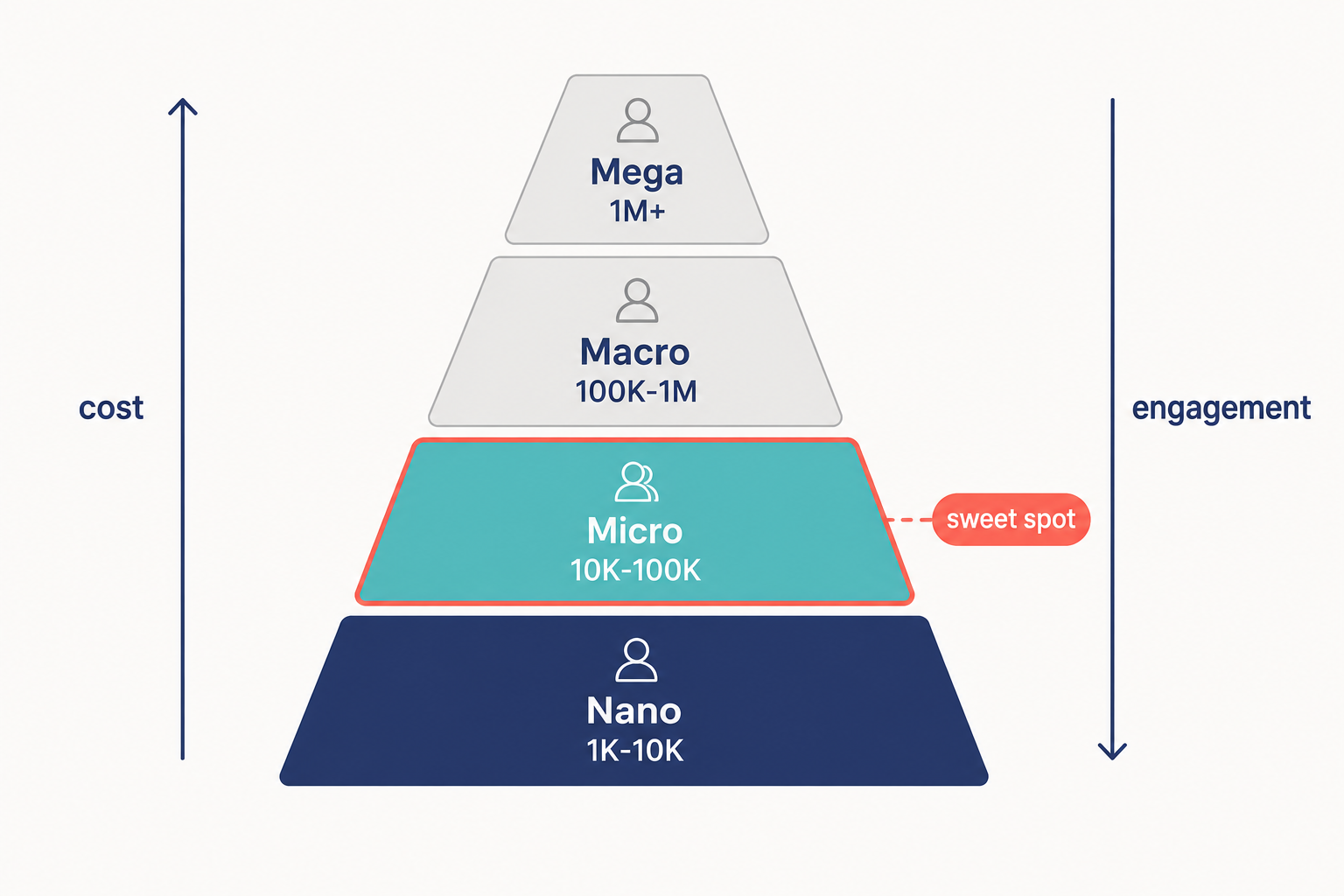
Tier | Follower Range | Best For | Typical Trade-off |
|---|---|---|---|
Nano | 1K–10K | Hyper-local, high trust, tight budgets | Limited reach per post |
Micro | 10K–100K | Niche products, strong engagement, DTC | Sweet spot for most brands |
Macro | 100K–1M | Broad awareness, category launches | Higher cost, lower engagement |
Mega | 1M+ | Mass reach, brand-name campaigns | Expensive, often lowest engagement rate |
For most cross-border DTC brands, micro-influencers are the sweet spot. They cost less, their audiences trust them more, and their engagement rates routinely beat larger accounts. The data backs this up: Influencer Marketing Hub reports that 64% of marketers have partnered with micro-influencers, and 47% say this tier delivers their strongest campaign results. That's why brands with tight budgets lean on them.
Match the Creator to Your Goal, Not Your Ego
A million followers looks impressive in a pitch deck. It doesn't sell product if those followers don't match your customer.
Ask three questions before you shortlist anyone. Does this creator's audience live where I sell? Do they post about my category already? Do their followers actually engage, or just scroll past? If you can't answer yes to all three, keep looking. This is the filter that would have saved Lumen $2,800.
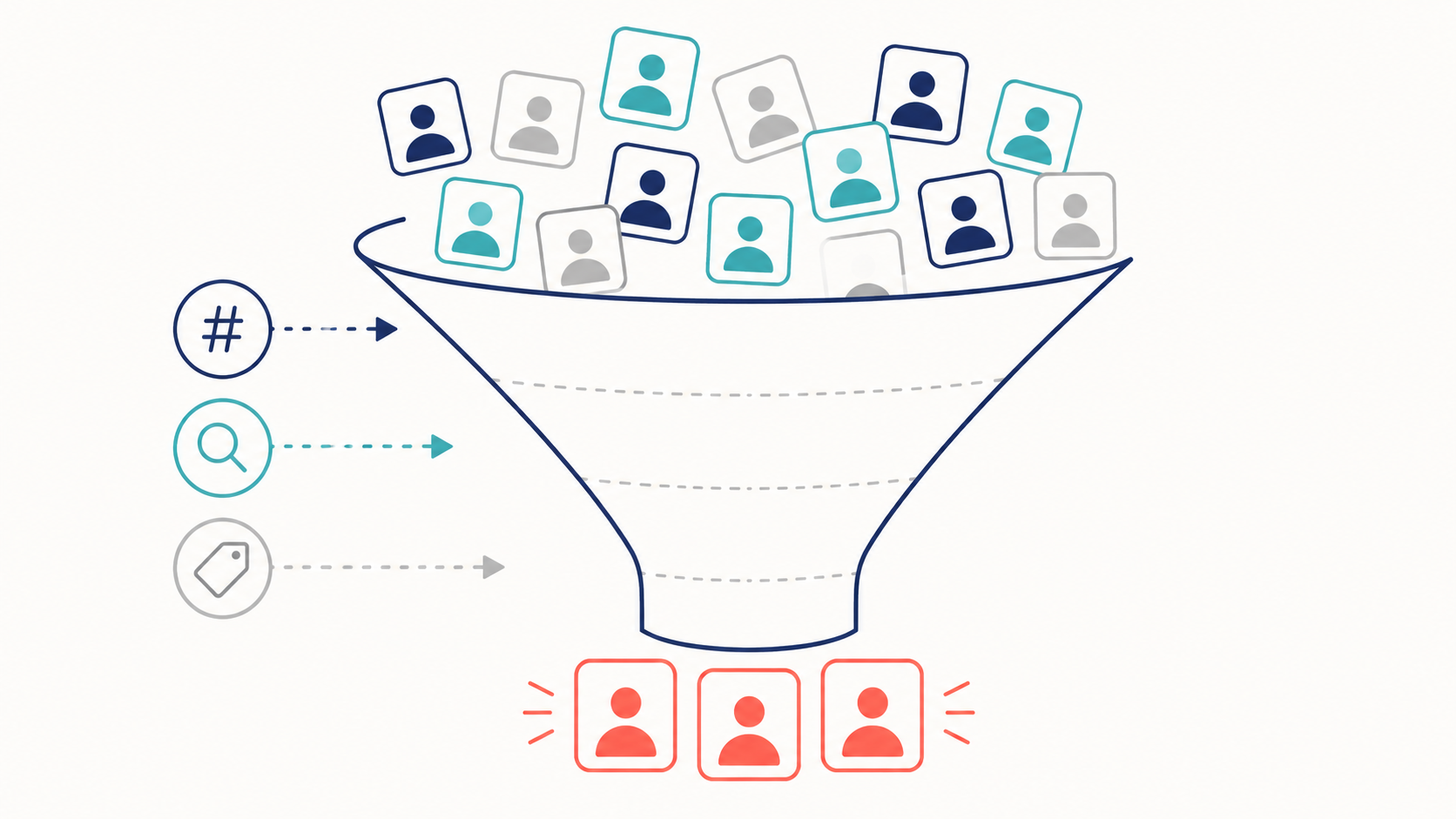
How to Find Instagram Influencers for Free (5 Manual Methods)
You don't need a paid tool to start. These five methods cost nothing but time, and they work especially well when you're finding your first handful of creators.
1. The Instagram Explore Page and Reels Recommendations
Open the Explore page and start engaging with content in your niche. Like a few posts from creators in your space, watch their Reels, and Instagram's algorithm will start surfacing similar accounts. Within a day or two, your Explore feed becomes a curated list of creators who match your category.
This works because the algorithm is built to find related content. Feed it signals about what you want, and it hands you candidates for free.
2. Niche Hashtag Search (and Why Recent Beats Top)
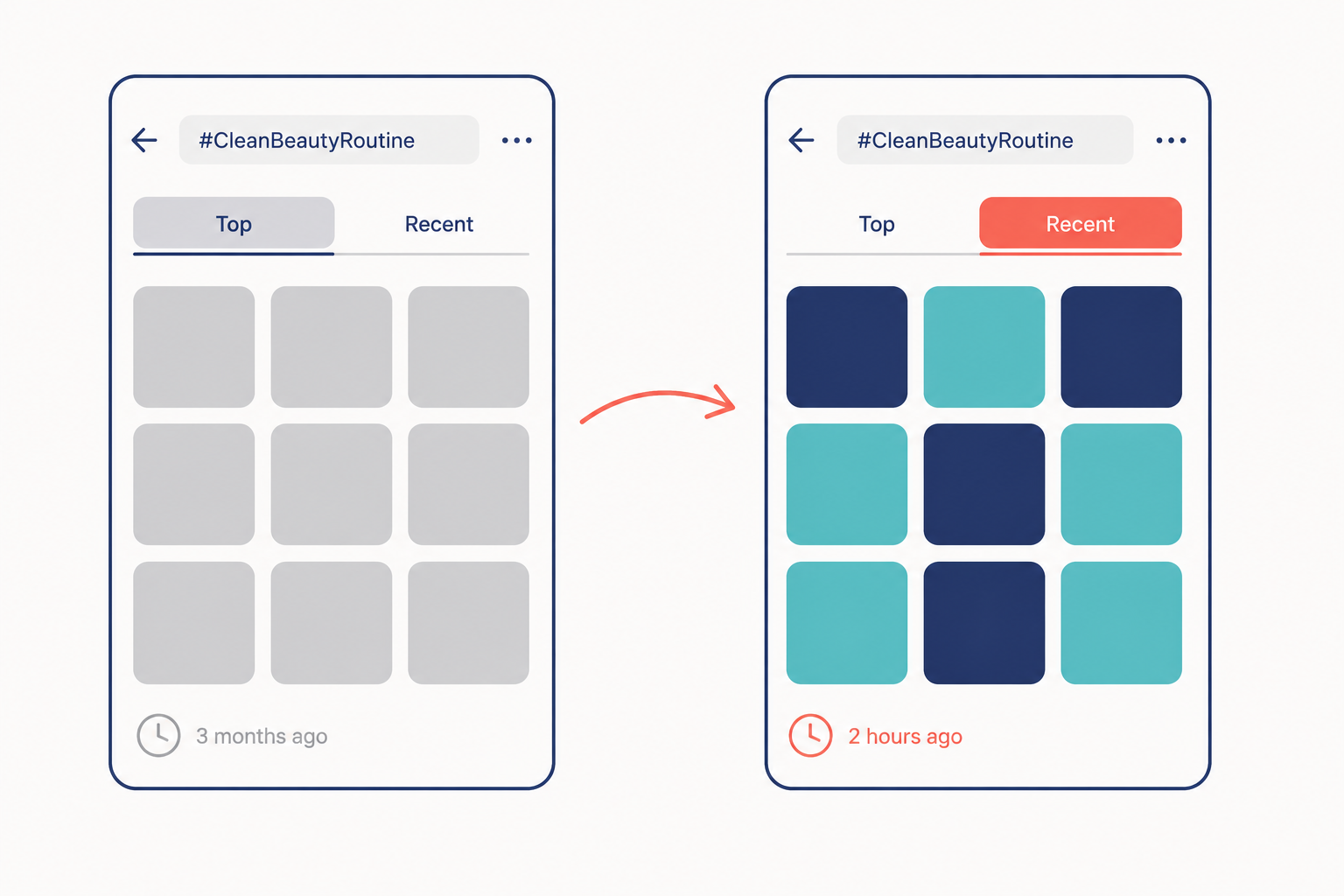
Search hashtags specific to your niche, think #CleanBeautyRoutine or #HomeGymSetup, not broad tags like #fitness. Broad hashtags surface the same handful of huge accounts everyone already knows.
Here's the tactic most people miss: check the Recent tab, not just Top. The Top tab shows posts that already went viral. The Recent tab shows active creators posting right now, which is exactly who you want to reach out to. An account that posted two hours ago is far more likely to reply than one whose viral post is three months old.
3. Competitor Tagged Posts and Brand Mentions
Your competitors have already done the vetting work. Go to a competitor's profile, tap the tagged photos tab, and you'll see every creator who has posted about them. These creators already make content in your category and already work with brands like yours.
You can do the same with your own brand. Check who's tagging or mentioning you, some of your best future partners are already fans.
Want to skip the manual scrolling once your list grows? CreatiVault's Influencer Scout lets you filter a large creator database by follower count, category, and more, so you go from "find 50 beauty creators" to a shortlist in minutes. See how it works →
4. Your Own Followers and Customers
Some of the best influencers for your brand already follow you. They know your product, they use it, and their endorsement reads as genuine because it is.
Scroll your follower list for accounts with engaged audiences in your niche. A customer with 8,000 engaged followers who already loves your product will outperform a cold 200,000-follower account almost every time.
5. Google Search Operators
Google indexes Instagram creator content, so smart search strings surface influencers fast. Try `site:instagram.com "your niche" "collab"` or search `"top [niche] influencers 2026"` to find roundup lists other marketers have already built.
This method is slow and manual, one search, one profile at a time. But it's free, and it turns up creators who don't rank in the app's own search.
How to Find Influencers Faster with Discovery Tools
Free methods work until they don't. Once you're vetting more than 10 or 15 creators, manual research becomes a time sink, one afternoon lost to browser tabs and half-finished spreadsheets.
That's where discovery tools earn their cost. A good platform lets you filter a creator database by follower range, engagement rate, location, and niche, then hands you contact details and audience-authenticity checks in one place. What takes days manually takes minutes.
When Priya, a solo marketer at a skincare startup, switched from hashtag hunting to a discovery tool in Q1 2026, she cut her creator-sourcing time from six hours a week to under one. The tool didn't just find creators faster. It flagged three accounts with suspicious follower spikes she would have missed by eye.
Free tools like Instagram's native search and Google get you started. Paid platforms scale you up. The break-even point is usually when creator research eats more than a couple of hours a week, that's when a tool pays for itself.
How to Find Influencers on TikTok and YouTube
The same principles port across platforms. On TikTok, use the search and Creators tab, and lean on hashtag discovery the same way you would on Instagram, TikTok's algorithm surfaces niche creators fast once you engage with a category. On YouTube, search your niche plus "review" or "haul," then check which channels consistently cover your product type.
The vetting rules don't change. Whether you're finding social media influencers on Instagram, TikTok, or YouTube, engagement quality beats raw subscriber count every time. Pick the platform where your customers actually spend time, then apply the same methods.
How to Vet an Influencer Before You Reach Out
Finding creators is the easy part. Vetting them is what protects your budget. Here's the checklist to run before you send a single message.
Calculate Engagement Rate (the Real Signal)
Engagement rate tells you whether an audience actually cares. The formula is simple:
Engagement rate = (average likes + comments) ÷ follower count × 100
Rough benchmarks for Instagram in 2026:
- Under 1% on a large account: a red flag, possible fake followers
- 1–3%: solid for macro accounts
- 2.5–4%: strong, common among engaged micro-creators
- 5–6%+: excellent, typical of nano-influencers with tight communities
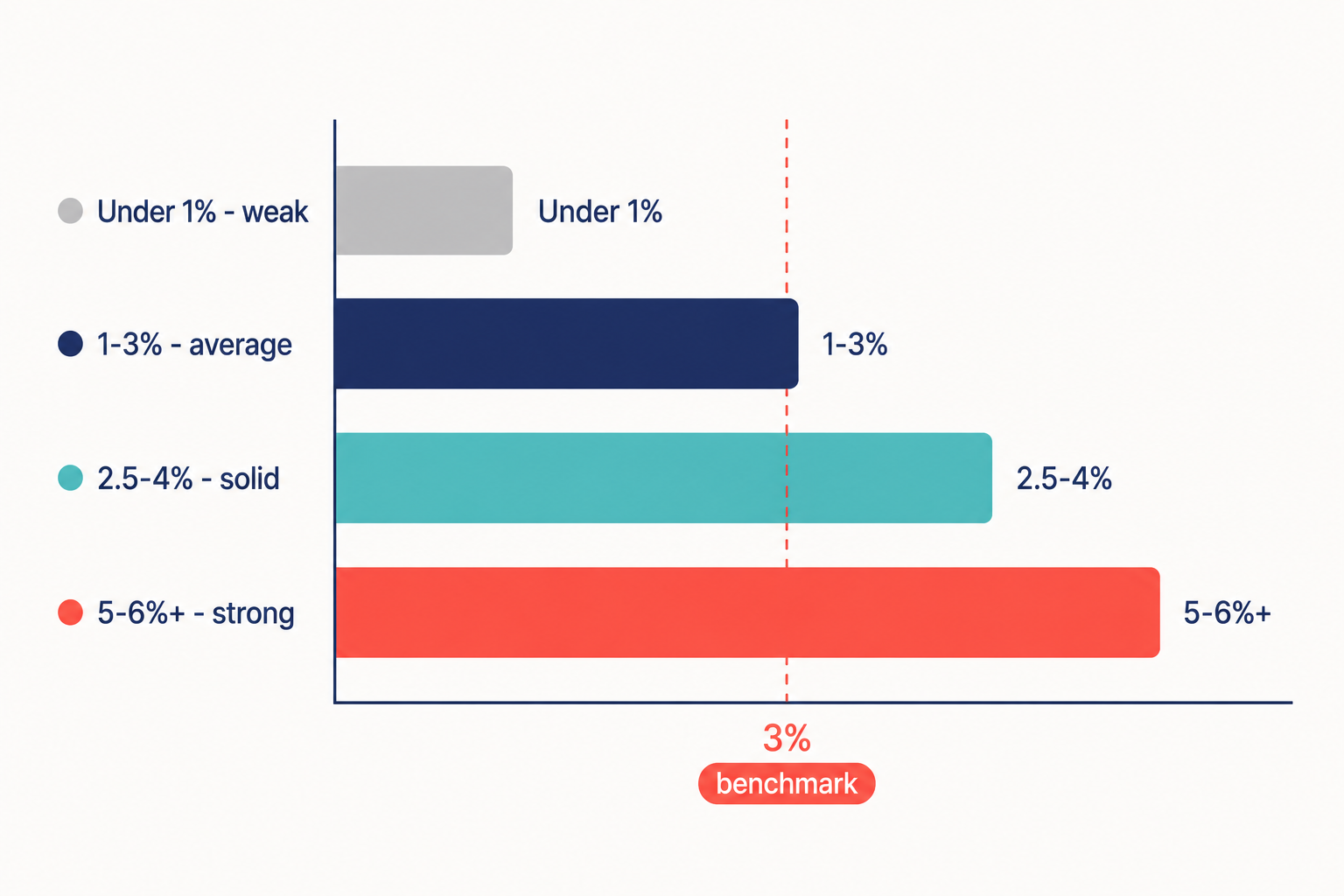
A 50,000-follower account with 4% engagement will almost always outperform a 500,000-follower account sitting at 0.8%.
Spot Fake Followers Before You Pay
Fake followers are everywhere, and they're expensive. Watch for these red flags:
- Sudden follower spikes with no viral post to explain them
- Engagement under 1% on a large account
- Generic comments like rows of emojis or "nice pic," instead of real conversation
- Audience geography mismatch, a US brand looking at a creator whose followers are 70% in unrelated markets
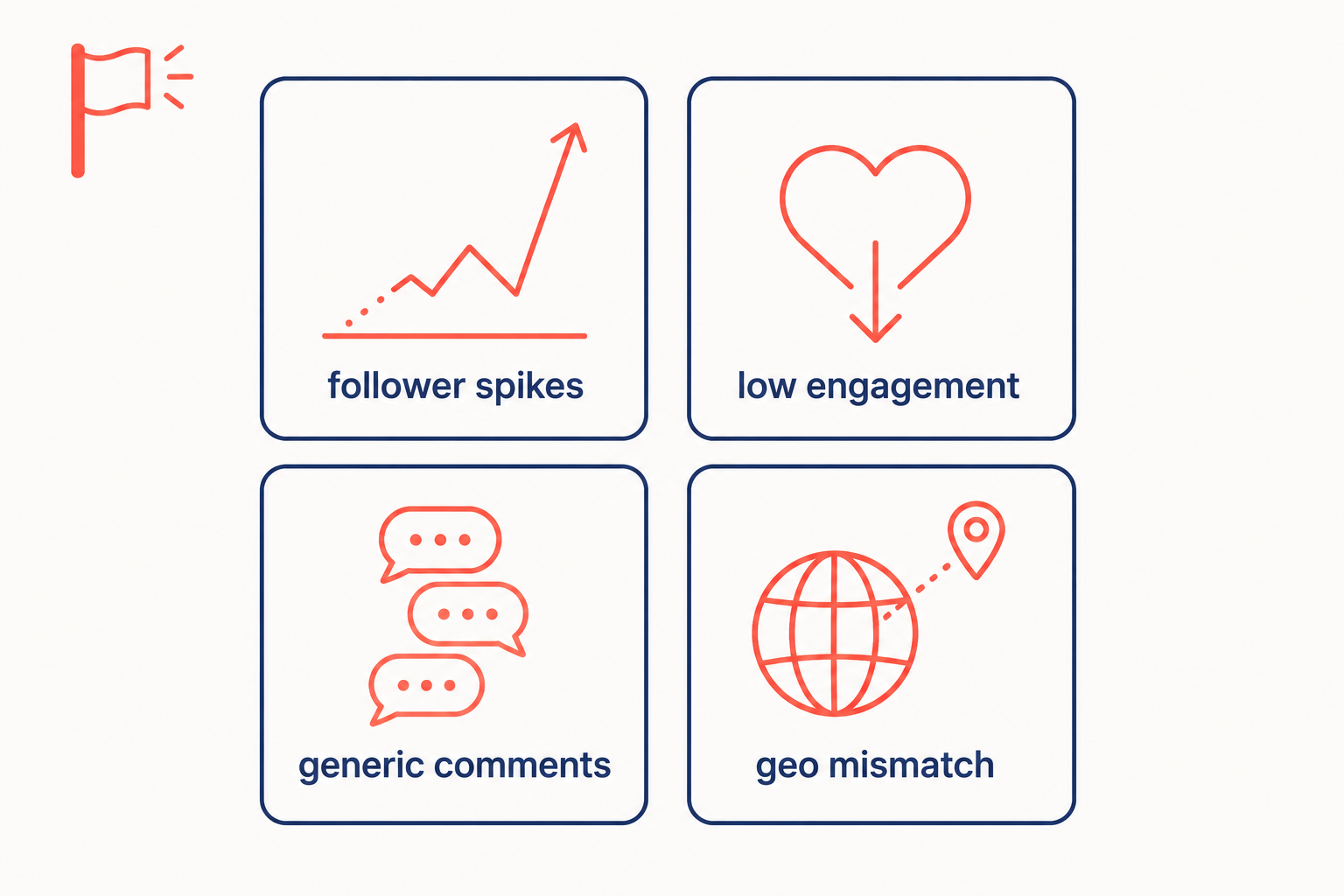
Checking this manually means scrolling comments and eyeballing follower charts, doable, but slow and easy to get wrong. This is exactly where a tool with built-in audience-authenticity detection saves you. CreatiVault's plugin flags fake-follower signals and audience quality in one click, so you catch an inflated account before it costs you a campaign, not after.
The Full Vetting Checklist
Before you reach out, confirm:
- Engagement rate meets the benchmark for their tier
- Audience demographics match your target customer
- Content quality and aesthetic fit your brand
- Past brand partnerships look genuine (not one sponsored post after another)
- Comments show real conversation, not bot signals
- No unexplained follower spikes
Turn Discovery into a Repeatable Outreach System
Finding influencers once is a task. Finding them repeatably is a system, and the brands that win at influencer marketing treat it that way.
The workflow is simple: build a shortlist, unlock contact details, send outreach, then track every creator through the pipeline, contacted, replied, negotiating, signed. Trying to run that in a spreadsheet falls apart around the third campaign. Messages get lost, follow-ups slip, and you re-contact people you already talked to.
This is the full loop Influencer Scout is built for: discover creators, unlock emails, send templated campaigns in bulk, and track the whole pipeline in one place. For agencies, you can even share shortlists with clients for approval. Ready to run your whole influencer pipeline in one tool? Explore CreatiVault's features →
Frequently Asked Questions
How do I find Instagram influencers for free?
Search niche hashtags (check the Recent tab), browse your competitors' tagged posts, engage with the Explore page to train the algorithm, and look through your own followers. These four methods cost nothing and work well for finding your first 10–15 creators.
How do I check if an Instagram influencer has fake followers?
Calculate their engagement rate (likes plus comments divided by followers). Under 1% on a large account is a warning sign. Also watch for sudden follower spikes, generic emoji-only comments, and an audience concentrated in markets unrelated to the creator. Tools with audience-authenticity detection flag these automatically.
How much do Instagram influencers charge in 2026?
Rates vary widely by tier. According to Influencer Marketing Hub's 2026 rate data, nano-influencers post for gifted product or roughly $10–$100, micro-creators typically charge $100–$500 per feed post (climbing toward $2,500 when engagement and production quality are strong), and macro accounts run $5,000–$10,000+ per post. Engagement rate and niche matter more than follower count when judging whether a rate is fair.
How do I find micro influencers specifically?
Use niche hashtags and the Recent tab to surface active small creators, check your own follower list, and filter by follower range (10K–100K) in a discovery tool. Micro-influencers are often the best value for DTC brands because of their higher engagement and lower cost.
Finding Instagram Influencers Comes Down to One Thing
You now have nine ways to find Instagram influencers, from free hashtag hunting to discovery tools that scale you past the spreadsheet stage. But the methods matter less than the mindset.
Stop chasing follower counts. The creator with 40,000 engaged followers who already posts about your category will beat the 500,000-follower account nearly every time. Free methods get you started, tools save you hours once your list grows, and disciplined vetting protects your budget from inflated accounts.
Here's your next step: pick one free method from this guide and build a list of 10 creators today. Run each one through the vetting checklist. When that list grows past what a spreadsheet can handle, that's your signal to bring in a tool that finds, vets, and tracks Instagram influencers in one place.
Start with signal, not follower count. That's how you find Instagram influencers who actually move product.
 Sophie Klein